When a Tooth Is Damaged but Not Gone: Inlays, Onlays, and the Honest Case for Each Option in Beverly Hills

When a Tooth Is Damaged but Not Gone: Inlays, Onlays, and the Honest Case for Each Option in Beverly Hills

November 2, 2026
Living with a damaged tooth sits in an uncomfortable middle ground. It’s not missing, so a full implant feels like overkill. But it’s too far gone for a simple filling to hold. That gap between “minor fix” and “full replacement” is exactly where most patients get the wrong recommendation. When your tooth structure is compromised but the root is still healthy, the right answer depends on how much of the tooth remains, where the damage is, and what your long-term goals are. Here’s the honest breakdown.

Key Takeaways

  • Inlays repair damage confined to the biting surface between the cusps; onlays extend to cover one or more cusps
  • Neither inlay nor onlay is appropriate once decay or fracture has reached the root or pulp
  • A crown makes more sense than an onlay when less than 50% of the original tooth structure remains
  • Dental implants become the right conversation when a tooth can’t be saved at all, not just when it’s damaged
  • Getting a second opinion before committing to any restoration protects you from over-treatment and under-treatment alike

What’s the Actual Difference Between an Inlay, Onlay, Crown, and Implant?

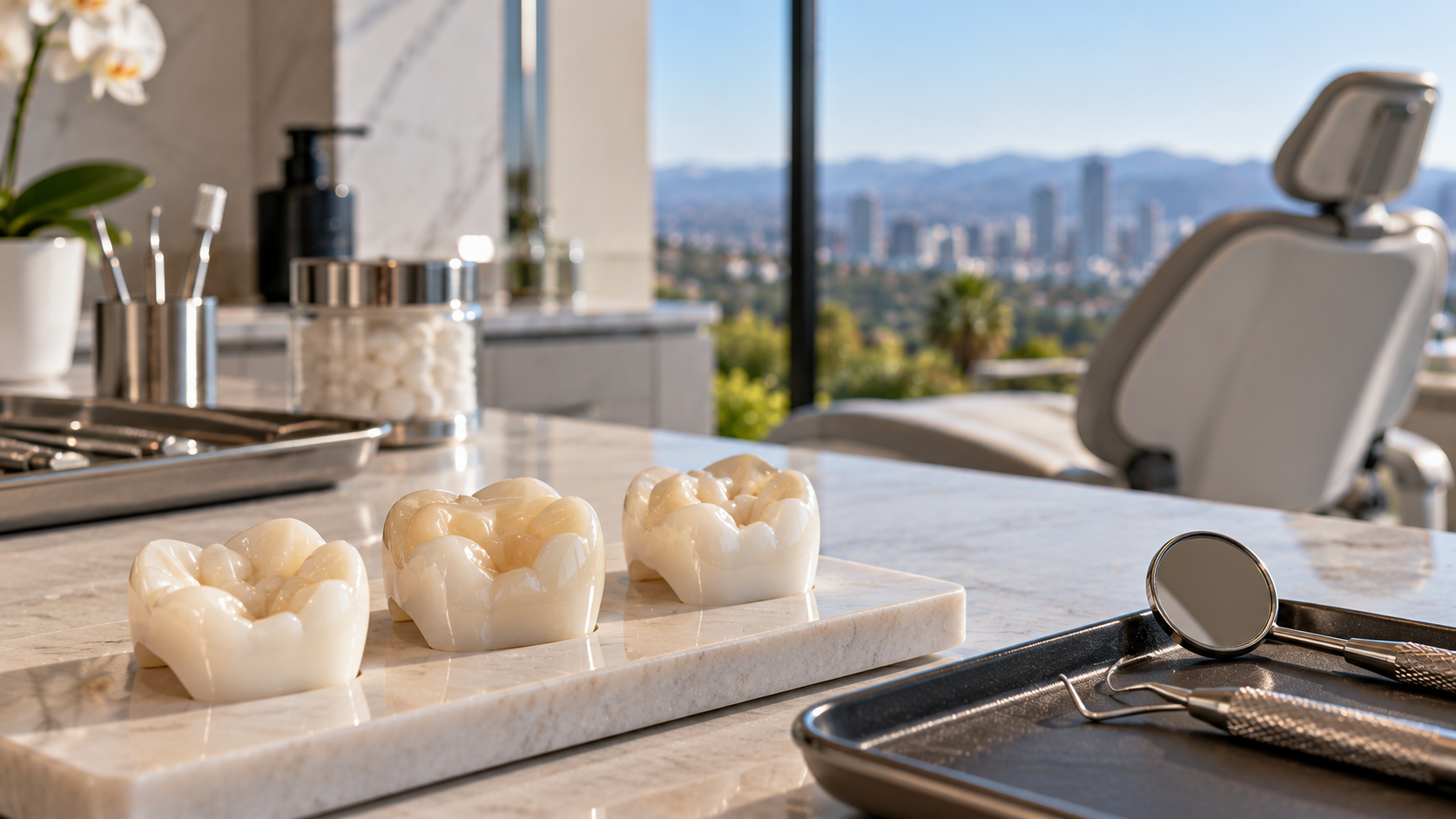
An inlay is a custom-fabricated restoration that fits inside the cusps of a back tooth, like a precise puzzle piece filling a cavity that’s too large for composite resin but doesn’t require capping the whole tooth. An onlay covers the same interior damage and extends over one or more of the cusps themselves. Think of the cusp as the raised peak of a molar. If the damage stays in the valley between peaks, that’s an inlay. If it climbs the peak, that’s an onlay. Both are bonded directly to the remaining tooth structure and can be made from porcelain, ceramic, or gold. The critical distinction: both assume you have healthy tooth structure worth preserving. That’s the entire premise. If that premise isn’t true, neither option is the right call. A crown, by contrast, caps the entire visible tooth. It’s appropriate when the remaining structure is too weak to support a partial restoration without cracking. An implant enters the picture only when the tooth itself is gone or unsalvageable at the root level – and understanding what the main types of dental implants are can help you frame that conversation before you ever sit in the chair.

Why Do So Many Patients End Up Over-Treated or Under-Treated?

The most common mistake isn’t choosing the wrong restoration. It’s choosing a restoration before the full picture is clear. A tooth that looks like it needs an onlay on a standard X-ray sometimes reveals deeper decay once the old filling is removed. A tooth that looks like it needs a crown can sometimes be restored more conservatively once a skilled clinician examines it under magnification. The recommendation changes based on what’s actually there, not what the image suggests. This is why the evaluation matters as much as the treatment. At Implant Dentistry by Doc Rok, every restoration decision starts with a thorough assessment of what’s structurally present, not just what’s visibly damaged. Patients who’ve been told they need a crown sometimes discover an onlay is sufficient. Patients who’ve been told an onlay will work sometimes find the damage is deeper than the initial exam showed. Neither outcome is unusual. It’s the nature of working inside a tooth.

The Restoration Decision Framework: A Practical Guide to Choosing the Right Option

The Structural Threshold Framework is a decision tool built around one question: how much of the original tooth structure is intact and healthy? Use it this way: More than 70% of tooth structure intact, damage contained to the biting surface: An inlay is likely appropriate. The tooth has enough healthy walls to hold a bonded restoration without risk of fracture under chewing pressure. 50-70% intact, damage reaching one or more cusps: An onlay is the candidate. The cusps need coverage to prevent cracking, but the root and walls are still sound enough to anchor the restoration without a full crown. Less than 50% intact, or significant cracks extending toward the gumline: A crown is the more protective choice. Trying to preserve tooth structure at this threshold often means the restoration fails within a few years, which costs more in the long run. Root compromised, infection present, or tooth structurally unsalvageable: The conversation shifts to tooth replacement options. A restoration placed on a failing foundation doesn’t save the tooth. It delays an inevitable extraction while adding cost. Understanding what happens if you don’t remove an infected tooth helps illustrate exactly why that delay carries real consequences. This framework doesn’t replace a clinical exam. It gives you the vocabulary to have an informed conversation with your dentist about what they’re seeing and why they’re recommending what they are.

Is an Inlay or Onlay Actually Better Than a Crown?

Here’s the contrarian position worth stating plainly: more conservative is not always better. The instinct to preserve tooth structure is sound. But an onlay placed on a tooth that needs a crown is a restoration that will fail. When it does, the resulting damage to the remaining structure often means the patient ends up needing an extraction anyway, having spent money on a restoration that bought them two or three years instead of a decade. The goal isn’t to use the least invasive option. The goal is to use the right option for what’s actually there. That said, dentistry has a documented history of over-recommending crowns. A crown removes significantly more healthy tooth structure than an inlay or onlay. Once that structure is gone, every future restoration on that tooth requires a crown. The patient is locked into a more invasive treatment path permanently. Choosing the wrong restoration in either direction has lasting consequences. That’s why a second opinion on complex dental decisions is one of the highest-value steps a patient can take before committing to any significant restoration. If you’re weighing your options and want a clear read on what your tooth actually needs, scheduling a consultation at Implant Dentistry by Doc Rok is a straightforward next step. Dr. Roknian has placed over 10,000 implants and evaluates complex cases regularly, which means she’s seen the full range of what these decisions look like in practice.

How Do Inlays and Onlays Compare to the Alternatives?

 
Situation Best Option Why
Small-to-mid decay, cusps intact Inlay Preserves max structure, bonds well, durable
Decay or fracture reaching cusps Onlay Protects cusps without full crown prep
Less than 50% structure remaining Crown Onlay won’t hold; crown prevents further fracture
Tooth cracked to the gumline Extraction + implant evaluation No restoration survives a subgingival fracture
Root canal completed, structure weakened Crown Post-RCT teeth are brittle; need full coverage
Tooth missing entirely Dental implant Only option that preserves jawbone and function
The table above reflects clinical thresholds, not preferences. Patients sometimes arrive hoping an inlay or onlay will work because they’ve heard those options are “less invasive.” The question isn’t invasiveness. It’s whether the restoration will hold.

What Inlays and Onlays Can’t Do

Inlays and onlays are excellent restorations for the right tooth. They’re not appropriate for every situation, and being clear about that is more useful than overselling them. They don’t work when the tooth has an active infection. Placing any permanent restoration over infected tissue seals the infection in, which accelerates bone loss and can compromise adjacent teeth. The infection has to be resolved first, which sometimes means a root canal, and sometimes means extraction. They don’t address cosmetic concerns on front teeth. Inlays and onlays are back-tooth restorations. If you’re dealing with a chipped or discolored front tooth, cosmetic dentistry in Beverly Hills offers a range of more appropriate options for those situations. They don’t prevent gum disease. A beautifully placed onlay on a tooth surrounded by inflamed, receding gum tissue is a restoration sitting on an unstable foundation. Periodontal health has to be addressed alongside any restorative work. Patients dealing with gum disease alongside structural tooth damage may benefit from understanding how laser periodontal treatment works before committing to a restoration plan. And they don’t replace missing teeth. If the tooth is gone, the only options that preserve bone and restore full function are implant-based. Patients who aren’t sure whether their jawbone can support an implant may also want to explore the signs your jawbone may require support before moving forward. In Beverly Hills, single tooth implants typically range from $4,000 to $8,000 depending on the complexity of the case (Bedford Dental Group, 2024). That’s a real number to plan around.

A Typical Case: When the Right Answer Isn’t Obvious

Consider a patient who comes in with a cracked molar. The crack is visible on the biting surface, there’s an old amalgam filling that’s failed, and the tooth is sensitive to cold. On initial examination, an onlay looks like a reasonable option. But when the old filling is removed, the crack extends further than the X-ray suggested, running down one wall toward the gumline. At that point, an onlay won’t provide adequate protection. The wall it would bond to is compromised. A crown is now the right call, and the patient needs to understand why the recommendation changed. This kind of intraoperative discovery is common. It’s not a bait-and-switch. It’s what happens when you’re working inside a tooth that’s been damaged over years. The honest answer is that no clinician can guarantee the final recommendation until they can see the full picture. The patients who navigate this well are the ones who came in with realistic expectations and a dentist they trust to explain what they’re seeing in real time.

FAQ

How long do inlays and onlays actually last?

With proper care and good oral hygiene, inlays and onlays placed with high-quality materials can last 10 to 30 years. Longevity depends on the material used, the quality of the bond, and whether the underlying tooth remains healthy. Porcelain and ceramic options are more aesthetic; gold is more durable under heavy bite pressure.

Can I get an inlay or onlay if I’ve already had a root canal on that tooth?

A tooth that’s had a root canal is more brittle than a living tooth because it no longer has a blood supply. In most cases, a crown is the more protective choice after a root canal, particularly on a molar that takes significant chewing force. An onlay is sometimes appropriate for smaller restorations on root-canal-treated premolars, but this depends on how much structure remains.

Will insurance cover inlays or onlays?

Coverage varies by plan. Many dental insurance plans treat inlays and onlays as major restorations, covering 50% after a deductible, though some plans classify them differently. It’s worth reviewing your specific plan before treatment. The team at Implant Dentistry by Doc Rok can help clarify what your coverage looks like.

What’s the difference between a porcelain onlay and a gold onlay?

Gold onlays are more durable and require less tooth removal during preparation, but they’re visible on back teeth. Porcelain and ceramic onlays match tooth color and are generally preferred for aesthetic reasons. For patients with heavy bite forces or bruxism, gold may actually be the longer-lasting choice even if it’s less cosmetically appealing.

How do I know if my tooth can be saved or if I need an implant?

The answer comes down to whether the root is intact and infection-free. A tooth with a healthy root can often be restored. A tooth with a vertical root fracture, advanced bone loss from infection, or structural failure below the gumline generally can’t be saved with a restoration. A thorough exam with current imaging is the only way to know for certain.

Is there a point where waiting makes the decision easier?

Waiting almost never makes a damaged tooth easier to treat. Decay progresses. Cracks extend. Bone loss from infection accelerates. A tooth that’s a good candidate for an onlay today can become a crown case in six months and an extraction candidate in a year. The decision doesn’t get simpler with time. It gets more expensive and more limited.

Should I get a second opinion before committing to a crown or implant?

Yes, especially for any restoration that involves removing significant tooth structure or replacing a tooth entirely. A second opinion from a clinician experienced in complex cases, like Dr. Roknian at Implant Dentistry by Doc Rok, can confirm whether the proposed treatment is appropriate or whether a more conservative option is viable. It’s one of the most protective steps you can take. The right restoration is the one that matches what’s actually there, not the one that sounds the least invasive or the most impressive. If you’re not sure which category your tooth falls into, that’s exactly the conversation to have before anyone picks up a drill. Schedule a consultation with Implant Dentistry by Doc Rok in Beverly Hills. Dr. Roknian will give you a direct assessment of what your tooth needs, what the options are, and what happens if you wait. No pressure. Just a clear picture. Contact the practice here.

About the Author

Dr. Vivian Roknian, DMD, is a board-certified implantologist and cosmetic dentist based in Beverly Hills, California. With over 15 years of clinical experience and more than 10,000 implants placed, she specializes in complex dental reconstruction, smile makeovers, and advanced restorative care. Dr. Roknian has trained more than 2,000 dentists nationally and internationally and leads Implant Dentistry by Doc Rok, where personalized care and clinical precision guide every treatment decision.

References

Bedford Dental Group – cost of dental implants in Beverly Hills
Click to listen highlighted text!